
TECHNOLOGY
Technology
The sensor and platform behind the data.
Magnetometer: QuSpin QTFM Gen-2
Our magnetic surveys are built around the QuSpin QTFM Gen-2, a pulsed, rubidium optically pumped magnetometer. It is a second-generation sensor designed for integration into compact unmanned aerial and underwater platforms, with a substantial gain in robustness over the earlier G1.
Two design features matter most in the field. It holds sensitivity and stability in noisy, rapidly changing magnetic environments, tolerating fast field changes without losing lock. And its deadzone is a negligible axial cone rather than the large planar deadzone of earlier sensors, so it operates cleanly across a wide range of orientations and latitudes.
The sensor is inherently a total-field (scalar) instrument. An optional three-axis coil attachment slides over the sensor head and applies known bias fields, from which the vector components of the background field are calculated. We use this vector capability for heading-error compensation via Tolles-Lawson modelling, not simply as a different deliverable.
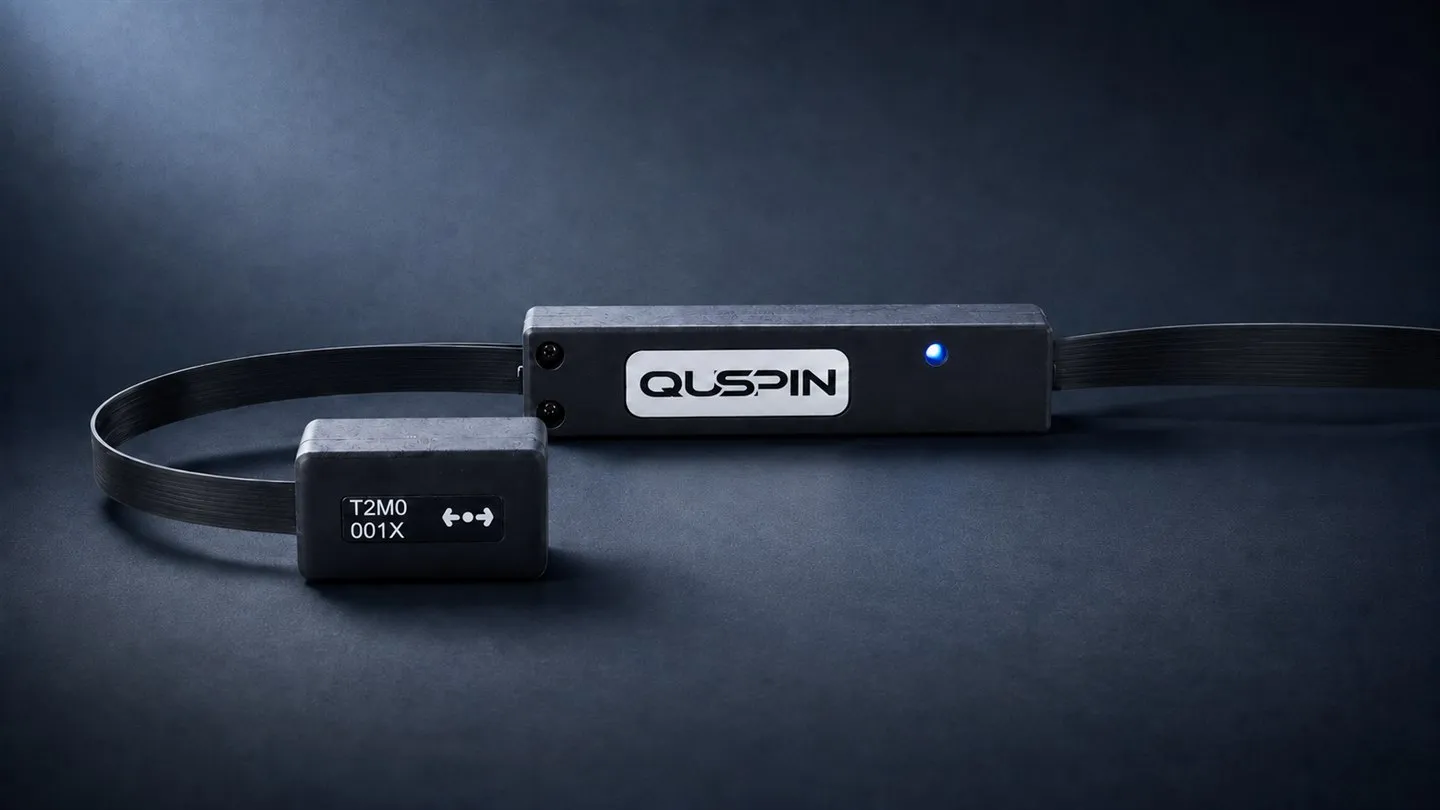
Specifications
Manufacturer's published specifications for the QTFM Gen-2. Figures vary by sensor version, firmware and configuration.
MEASUREMENT PERFORMANCE
| Magnetometer type | Pulsed rubidium total-field |
|---|---|
| Measurement method | Free induction decay |
| Scalar sensitivity | <5 pT/√Hz (typ. 3 pT/√Hz) |
| Derived-vector sensitivity | <0.1 nT/√Hz, optional |
| Output data rate | Scalar ≤1000 Hz; triaxial ≤250 Hz |
| Bandwidth | Up to 500 Hz |
| Operating range | 1,000–150,000 nT typ. |
| Heading error | <3 nT, uncompensated |
| Dead zone | Axial cone, <±7° (typ. <5°) |
| Slew rate limit | None |
| Maximum field gradient | Approximately 300 nT/cm |
| Operating temperature | −15 to +55 °C |
PHYSICAL
| Sensor head | 17.7 × 19.8 × 35.8 mm |
|---|---|
| Electronics control unit | 14.7 × 24.4 × 92.3 mm |
| Weight | 12 g sensor head + 29 g ECU (6.5 g without housing) |
ELECTRICAL & COMMUNICATION
| Input power | +5 V via Standard Comms Board, or 10–12 V |
|---|---|
| Operating power | Approximately 2.5 W |
| Startup power | Approximately 3.5 W |
| Digital communication | UART; USB via Standard Comms Board |
| Filtering | Programmable onboard digital filtering |
| Calibration | None required |
The QTFM has been independently deployed and tested in peer-reviewed UAV magnetic research, including a Technical University of Denmark study on sensor choice and bird design for kilometre-scale UAV surveying, and a Université Clermont Auvergne study validating drone magnetic surveying for volcano monitoring against ground data. It is a sensor with a track record in published geophysical work.
References:
Towed bird
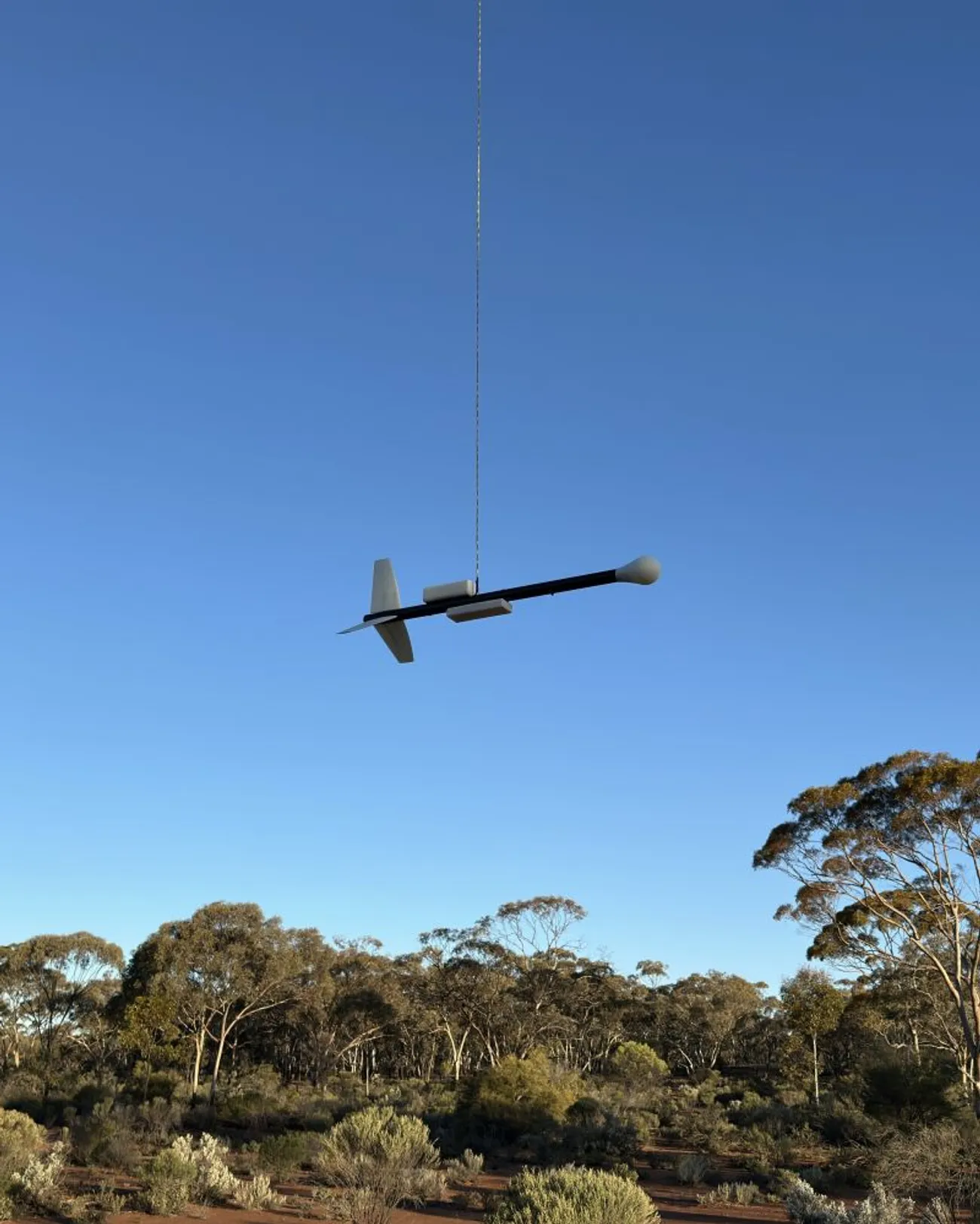
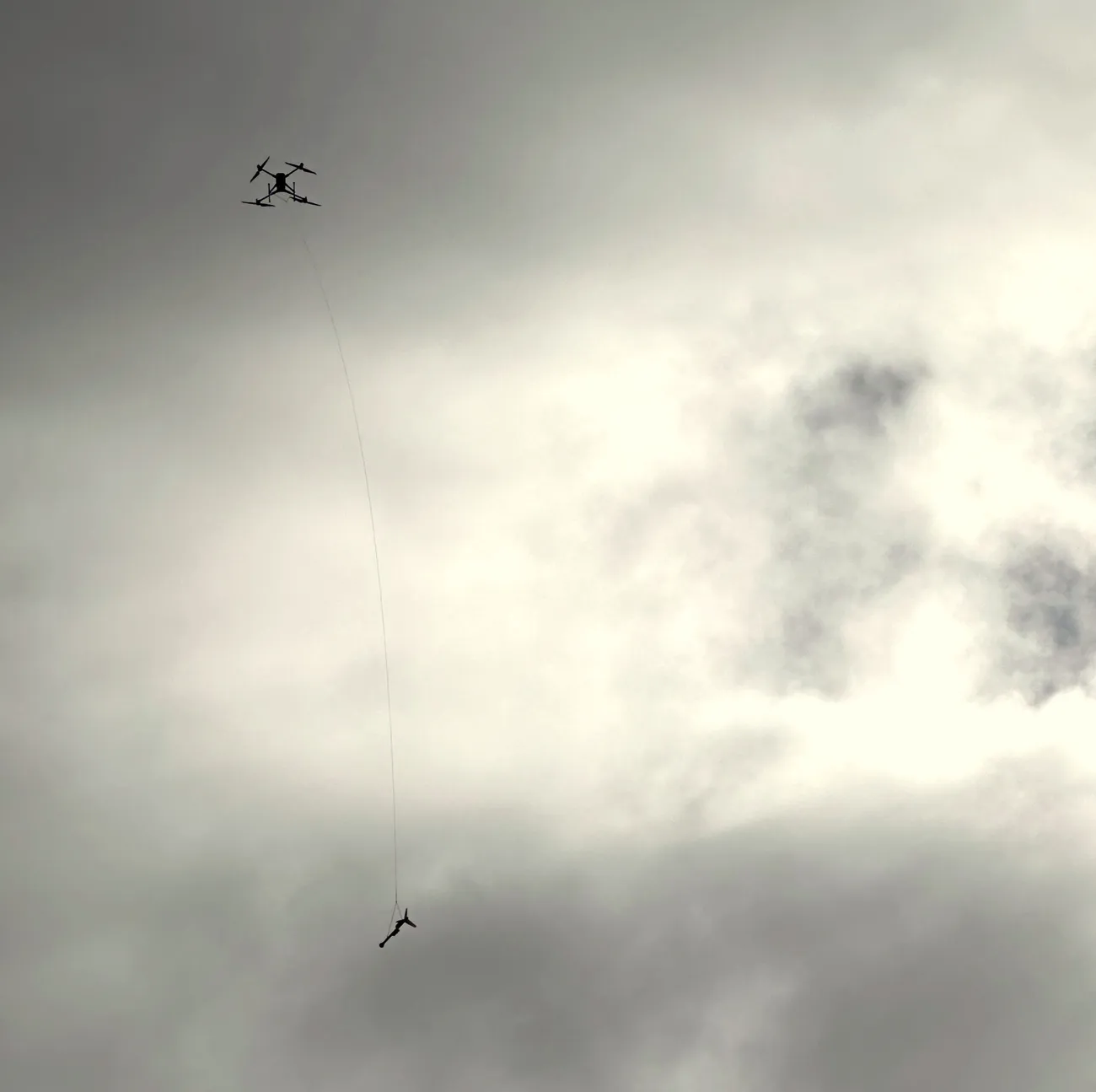
The magnetometer never flies on the airframe. It rides in a custom towed bird well below the aircraft, which keeps the sensor away from the platform's motors, ESCs and batteries, the dominant noise sources in close-mounted setups. The bridle geometry constrains the bird's motion in flight, so the sensor tracks stably and any residual heading behaviour is consistent and correctable in processing rather than random.
Platform: DJI Matrice 300 RTK
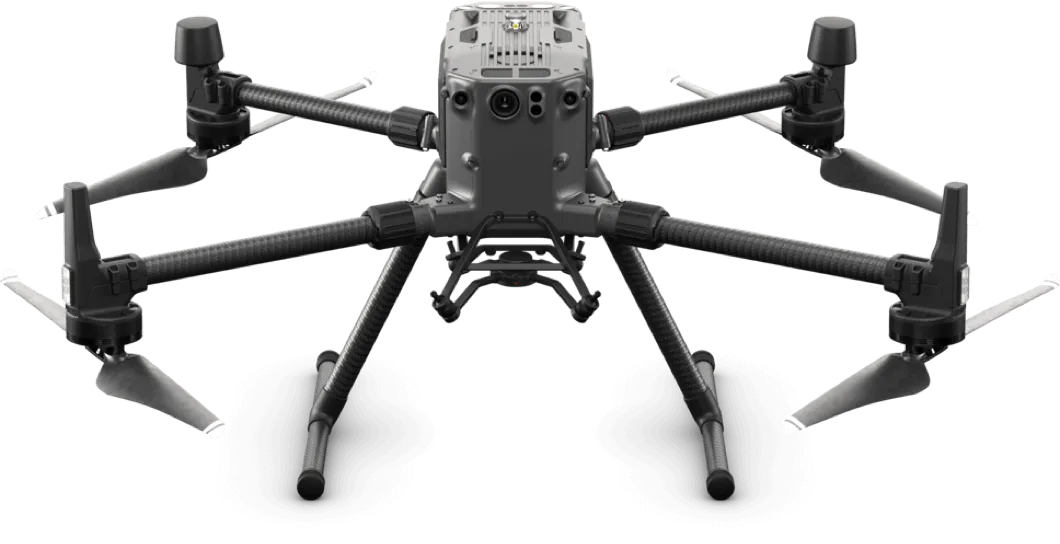
We fly the DJI Matrice 300 RTK. Long flight times and features such as obstacle avoidance make it well suited to surveying large areas per sortie, and its rugged, IP45-rated build lets us operate reliably in the conditions of the Australian outback. It is an industry-standard platform for this work.
Talk to us about your project
Send us the tenement outline or site boundary and the deliverables you need. We will come back with a fixed, itemised quote, usually within two business days.